Web Hosting Comparison: Shared, VPS, and Cloud Hosting Explained
Choosing the right web hosting service is one of the most important decisions when creating a website. Your hosting choice affects your website speed, security, performance, reliability, and ability to handle visitors.
Many beginners choose a hosting plan based only on price, but the cheapest option is not always the best choice. Different types of hosting are designed for different needs, from small personal websites to large business platforms with thousands of visitors.
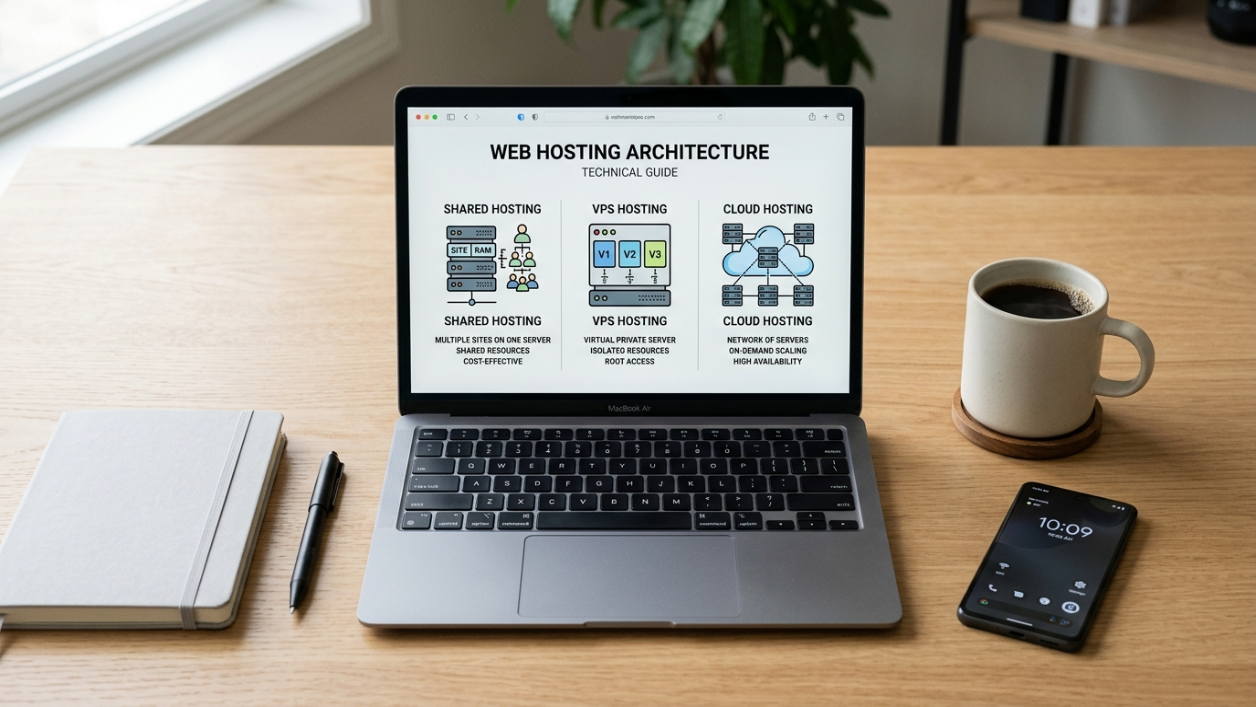
The three most common hosting options are shared hosting, VPS hosting, and cloud hosting. Understanding the differences between them can help you choose the right solution for your website.
What Is Web Hosting?
Web hosting is a service that allows your website files to be stored on a server and accessed by people online. When someone enters your website address, the hosting server delivers your website content to their browser.
A hosting provider manages the server infrastructure, including storage, security, maintenance, and technical resources. The quality of your hosting can directly impact your website’s loading speed and overall user experience.
Different hosting types provide different levels of resources, control, and performance.
Shared Hosting Explained
Shared hosting is the most basic and affordable type of web hosting. With shared hosting, multiple websites are stored on the same physical server and share its resources, including processing power, memory, and storage.
This option is popular among beginners, bloggers, and small websites because it is inexpensive and easy to manage. Most hosting companies provide simple control panels that allow users to install websites, manage files, and set up email accounts without advanced technical knowledge.
The biggest advantage of shared hosting is its low cost. It is usually the cheapest way to launch a website and works well for websites with limited traffic.
However, shared hosting also has limitations. Since multiple websites share the same server resources, another website using too many resources can sometimes affect your website performance. You also have less control over server settings compared with other hosting options.
Pros of Shared Hosting
Shared hosting offers several benefits:
- Affordable pricing for beginners
- Easy setup and management
- No advanced technical skills required
- Suitable for small websites and blogs
- Hosting providers handle server maintenance
For someone creating their first website, shared hosting is often a practical starting point.
Cons of Shared Hosting
Despite being convenient, shared hosting has some disadvantages:
- Limited resources
- Lower performance during traffic spikes
- Less customization and control
- Security risks due to shared server environments
As a website grows, many users eventually upgrade to a more powerful hosting solution.
VPS Hosting Explained
VPS stands for Virtual Private Server. VPS hosting uses a physical server that is divided into multiple virtual servers. Each VPS receives dedicated resources, providing more control and better performance compared with shared hosting.
VPS hosting is a popular choice for growing websites, online stores, and businesses that need more power but do not want the cost of a dedicated server.
Unlike shared hosting, your website is not heavily affected by other websites on the same physical server because your resources are separated.
VPS hosting also provides more customization options. Users often have greater control over server settings, software installation, and security configurations.
Pros of VPS Hosting
The main advantages of VPS hosting include:
- Better performance than shared hosting
- Dedicated resources
- More control and customization
- Improved reliability
- Suitable for growing websites
VPS hosting provides a good balance between affordability and performance.
Cons of VPS Hosting
VPS hosting can be more complicated to manage. Some plans require technical knowledge, especially if you choose an unmanaged VPS where you are responsible for server configuration and maintenance.
It is also more expensive than shared hosting, although the additional performance and control often justify the higher cost for growing businesses.
Cloud Hosting Explained
Cloud hosting is one of the most flexible hosting solutions available today. Instead of relying on a single physical server, cloud hosting uses multiple connected servers to distribute website resources.
This structure allows websites to handle traffic increases more effectively. If one server experiences a problem, another server can help keep the website running.
Cloud hosting is commonly used by businesses, applications, and websites that require high reliability and scalability.
One of the biggest advantages of cloud hosting is that resources can often be adjusted based on demand. This means your website can handle sudden increases in visitors without requiring a complete hosting migration.
Pros of Cloud Hosting
Cloud hosting provides several benefits:
- High reliability and uptime
- Easy scalability
- Better performance during traffic growth
- Flexible resource management
- Suitable for large websites and businesses
For websites expecting growth, cloud hosting can provide long-term flexibility.
Cons of Cloud Hosting
Cloud hosting is usually more expensive than shared hosting. Pricing can also be more complex because costs may depend on resource usage.
For small websites with very low traffic, cloud hosting may provide more power than necessary.
Shared vs VPS vs Cloud Hosting: Which One Is Better?
The best hosting option depends on your website’s needs.
Shared hosting is best for:
- Beginners
- Personal blogs
- Small business websites
- Low-traffic websites
VPS hosting is best for:
- Growing websites
- Online stores
- Websites needing more control
- Businesses requiring better performance
Cloud hosting is best for:
- Large websites
- High-traffic platforms
- Applications
- Businesses needing scalability
There is no single hosting type that is perfect for everyone. The right choice depends on your budget, technical knowledge, traffic expectations, and future growth plans.
Factors to Consider Before Choosing Hosting
Before selecting a hosting plan, consider important factors such as:
Website Traffic: A small website may work well on shared hosting, while high-traffic websites need stronger resources.
Performance: Faster hosting improves user experience and can support better search engine performance.
Security: Choose a provider that offers security features, backups, and protection against threats.
Scalability: Your hosting should allow you to upgrade as your website grows.
Support: Reliable customer support can save time when technical issues occur.
Final Thoughts
Shared, VPS, and cloud hosting each serve different purposes. Shared hosting is affordable and beginner-friendly, VPS hosting provides more control and performance, while cloud hosting offers flexibility and scalability for growing websites.
When choosing a hosting solution, think beyond the initial price. The right hosting plan should support your website goals, provide reliable performance, and allow room for future growth.
A smart hosting choice can create a stronger foundation for your website and help you provide a better experience for your visitors.